|
Ruby Valley, 1863, Fort Ruby
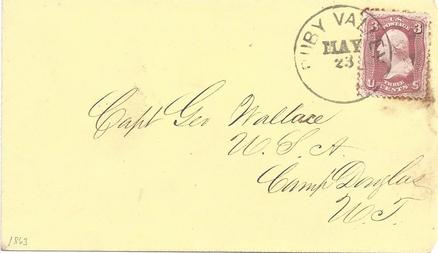
Ruby Valley, Lander, Nevada Territory Cover Date: May 23, 1863 The Civil War is in progress. The Mormons are ready to revolt. The Indians were on the war path. This cover touches all of this. |
|
|
Fort Ruby: First there were the Native Americans. Then there was silver. With the silver came the miners scouring the hills and mountains of Nevada in search of the 'big find.' With the miners came the loggers, merchants, ranchers, and farmers to support the appetite of the mining towns that sprang up throughout the state.
The Indians in Ruby Valley would not be immune to the influx of white settlers. There may have not been sliver, but there was great soil and pasture land - something Nevada did not have a lot of. The natural consequence of this was skirmishes between the natives and the immigrants. In 1862 it was decided that a permanent fort be established half way between Sacramento and Salt Lake City to protect the immigrant trail and overland mail. Colonel Conner lead seven companies of soldiers from California to Salt Lake. This band of 600 men, 55 wagons, and a regimental band must have been an impressive sight. 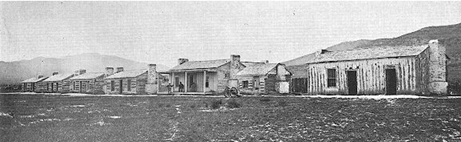
On September 4, 1862 Fort Ruby was established and Major Patrick A. Gallagher was almost immediately named the post commander. Colonel Conner wasted little time leading the remaining six companies on to Salt Lake City.
Under Major Gallagher's command a fort was established, buildings raised, and provisions found during the winter of 1862. In the spring of 1863 Captain Smith of Company H engaged the local Indians and defeated them. In June a treaty was signed by the Goshute Indians and the whites, represented by Major Gallagher. |
|
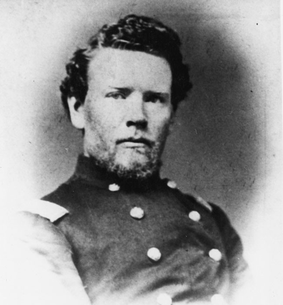
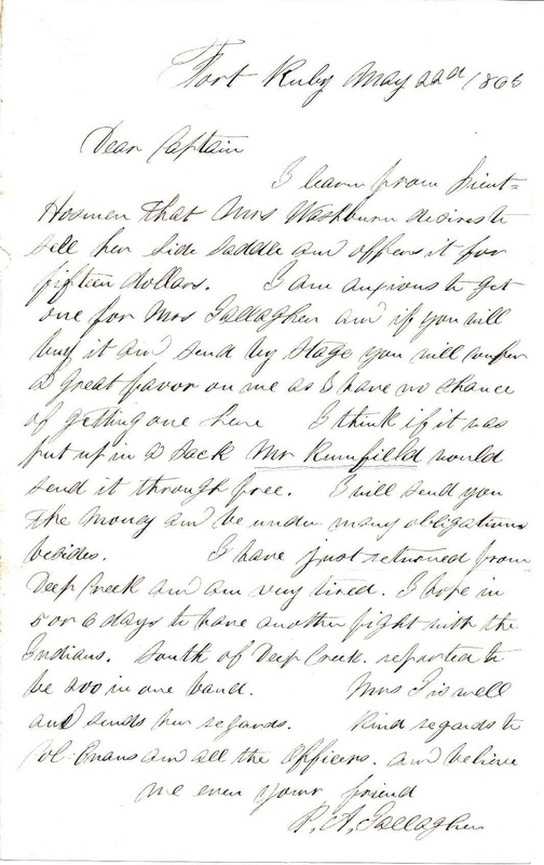
Major Gallagher: This cover includes a letter (see below) making this a very exciting historical piece. The letter is from Major Gallagher (see picture) to Captain George Wallace. There are two parts to the letter.
The second asks Captain Wallace to procure a riding saddle for the major's wife. Captain Wallace would "suffer a great debt" if he did this. The first part of the letter is about Major Gallagher's expedition to find the Goshute Indians in the area. The major battles in this vicinity took place on May 4th and 6th of 1863 when Captain Smith engaged the Native Americans, killing fifty-three with only one injured soldier. This letter addressed May 22nd and finds Major Wallace himself leading a band of soldiers to Deep Creek - fifty miles east of Fort Ruby. There are reports of a band of 200 Indians in the vicinity. He hopes to go back out in five or six days. We do not know if he went back out or not, but one month later he signed a peace treaty with the Goshute Indians. The treaty basically said that the Indians would not bother the whites, the whites could ranch and mine wherever they wanted to, and could enter the reservation whenever they wanted. The Indians would get $5,000 a year in goods for 20 years. THis may sound like a bad deal for the Indians, but they had just been beaten badly in three skirmishes and in April of 1863, just before the fighting, Major Gallagher reported that there were many Indians camping around the fort looking for hand outs because of the hard winter. In July of this year he was recalled back to Fort Douglas in Salt Lake City. He was commander of Fort Ruby for nine months. During this time he built a fort, ran a successful campaign against the Indians, and signed a peace treaty with the Goshute Indians. Not bad for nine months work! |
The May Skirmishes: Below is a short version about what happened those three days in May.
On May 4th Captain Smith of Company K of the 2nd California Cavalry found the Goshute Indians. Shoshone scouts had found them ten miles up the canyon. Captain Smith sent one element up the creek on the south side and the other on the north side under the cover of dark. At dawn the cavalry attacked with complete surprise. 24 Indians were killed, but at least 2 escaped. One solider was slightly wounded with an arrow int eh back. Captain Smith remained in case the Indians should return. Five Goshute Indians arrived at the camp that afternoon. All 5 were slain and 1 soldier was wounded. The cavalry moved to Schellbourne to camp for the night. (Although never an official camp, it was visited so often by soldiers it had earned the unofficial name of Fort Schellbourne. After searching for more Goshute Indians, Captain Smith found them on May 6th in Spring Valley. He immediately gave the signal to charge. A swamp in the path of the of the charge delayed the attack and gave the Goshutes an unexpected chance to escape. Still the cavalry was able to track down and kill 23 Indians. No soldiers were injured.
|
Post Office Dates: April 30, 1862 - present
The Ruby Valley post office was established in Toole County in the Utah Territory. So the fort was actually in Utah for three months. In July the Nevada Territory was created out of Utah and the fort became part of Lander County. That is where the fort was when Major Gallagher was in charge, In 1869, with the creation of Elko County, it would find itself inside the new county lines.
This cover is historically significant for many reasons as you have read. But it is also a very early Lander County, Nevada Territorial piece.
According to Gamett & Nelson's survey of Nevada postal history this cancel is rated an R-6.
The Ruby Valley post office was established in Toole County in the Utah Territory. So the fort was actually in Utah for three months. In July the Nevada Territory was created out of Utah and the fort became part of Lander County. That is where the fort was when Major Gallagher was in charge, In 1869, with the creation of Elko County, it would find itself inside the new county lines.
This cover is historically significant for many reasons as you have read. But it is also a very early Lander County, Nevada Territorial piece.
According to Gamett & Nelson's survey of Nevada postal history this cancel is rated an R-6.
